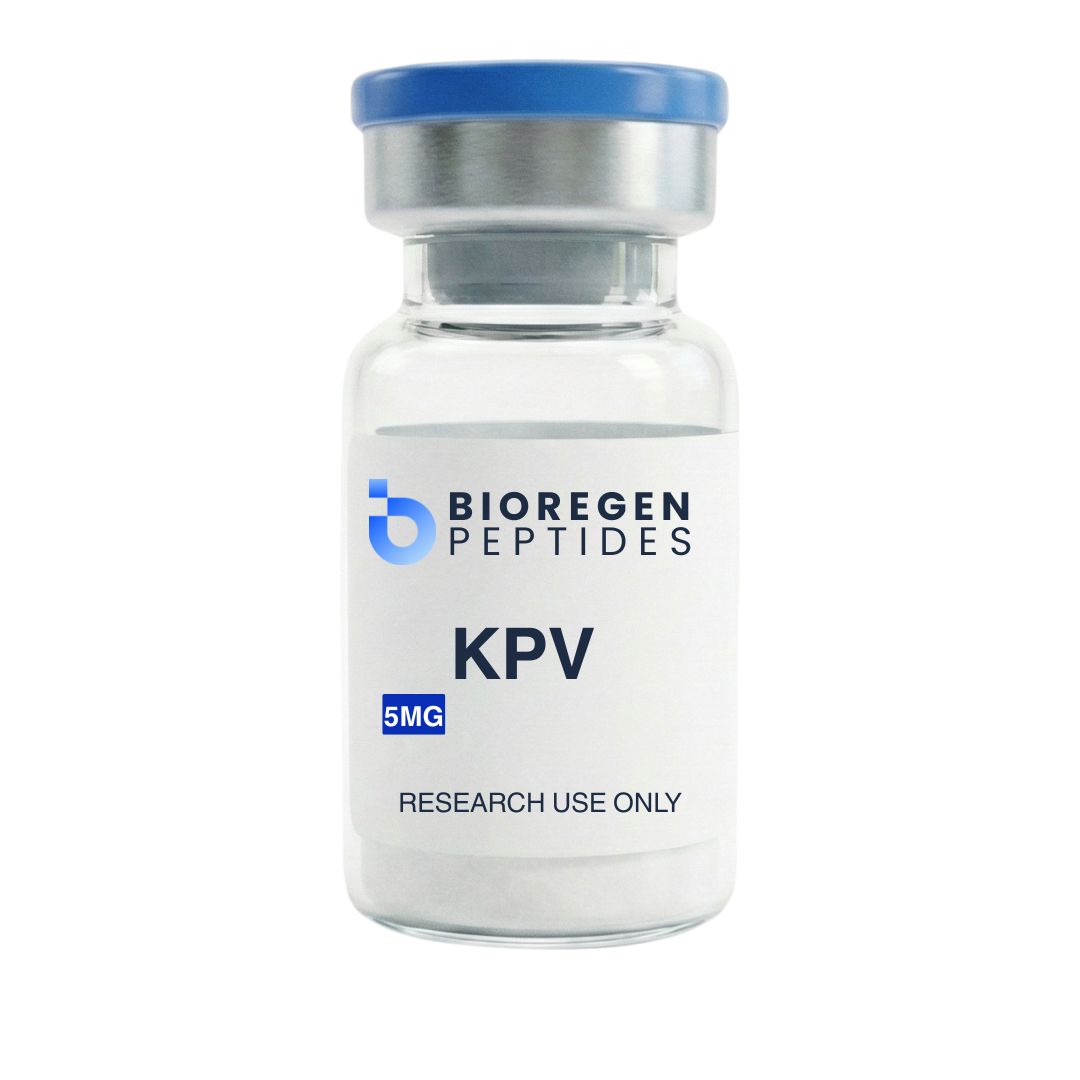
KPV
KPV (Lysine-Proline-Valine) | >99% Purity Tripeptide
A potent, naturally occurring tripeptide representing the C-terminal fragment of $\alpha$-MSH. KPV is highly distinguished in scientific literature for its profound anti-inflammatory and antimicrobial properties, functioning without the pigmentary effects of its parent hormone.
-
Purity: >99% Verified via HPLC/MS for exact research modeling.
-
Action: Inhibits NF-$\kappa$B activation to dampen pro-inflammatory cytokine production.
-
Research Focus: Investigated for gastrointestinal mucosal repair and dermatological wound healing.
-
Logistics: Physically stocked in the USA for rapid delivery to your lab.
Strictly for laboratory and research purposes only.
$1.00
KPV (Lysine-Proline-Valine) Research-Grade Anti-Inflammatory Tripeptide
Product Overview
KPV is a potent, naturally occurring tripeptide (3 amino acids) representing the C-terminal fragment of alpha-Melanocyte Stimulating Hormone ($\alpha$-MSH). While $\alpha$-MSH is known for its role in pigmentation, the KPV fragment is highly distinguished in scientific literature for its profound anti-inflammatory and immunomodulatory properties, which it exerts without the pigmentary effects of the full-length hormone.
The mechanism of action for KPV is primarily centered on its ability to enter the cell and interact directly with signaling molecules. It has been observed to inhibit the activation of NF-$\kappa$B (Nuclear Factor kappa-light-chain-enhancer of activated B cells), a major DNA transcription factor that triggers the production of pro-inflammatory cytokines. By modulating this pathway, KPV effectively dampens the “cytokine storm” and localized inflammatory responses. Furthermore, KPV possesses demonstrated antimicrobial properties, particularly against pathogens such as Staphylococcus aureus and Candida albicans, making it a multifaceted compound for immunological and dermatological research.
Primary Research Applications
Under doctor-reviewed scientific literature, KPV is frequently utilized in in vitro and animal model studies to observe:
-
Systemic & Localized Anti-Inflammation: Investigating the reduction of pro-inflammatory cytokines (IL-1, IL-6, TNF-$\alpha$) in models of acute and chronic inflammation.
-
Gastrointestinal Research: Observing the repair of the intestinal mucosal barrier and the mitigation of inflammation in models of Inflammatory Bowel Disease (IBD) and ulcerative colitis.
-
Dermatological Wound Healing: Tracking the acceleration of skin repair, reduction of hypertrophic scarring (keloids), and suppression of inflammatory skin conditions like psoriasis and dermatitis.
-
Antimicrobial Synergy: Measuring the peptide’s ability to disrupt pathogen membranes and work synergistically with traditional anti-fungal or anti-bacterial agents.
The BioRegen Standard
When you source your KPV from BioRegen Peptides, you are backed by our five core pillars of quality and service:
-
Uncompromising Purity: Every batch is independently third-party tested to guarantee >99% purity and molecular integrity, ensuring your inflammatory models are exact.
-
Doctor-Reviewed Accuracy: All product specifications and research handling guidelines are medically reviewed for absolute scientific accuracy.
-
Unbeatable Value: Premium, verified research compounds at industry-disrupting prices.
-
Fast, US-Based Shipping: Stocked physically in the USA to bypass customs delays and arrive at your lab in days.
-
Dedicated Support: Have a question about the KPV NF-$\kappa$B pathway? Email our US-based team at support@bioregenpeptides.com for a rapid response.
Product Specifications
-
Nomenclature: KPV (Lysine-Proline-Valine)
-
Amino Acid Sequence: Lys-Pro-Val
-
CAS Number: 67909-83-5
-
Molecular Formula: C16H30N4O4
-
Purity: >99% (Verified via HPLC/MS)
-
Format: Lyophilized Powder
Regulatory Notice: This product is sold strictly for laboratory and research purposes only. It is not intended for human consumption, diagnostic, therapeutic, or prophylactic use. Please refer to our doctor-reviewed handling guidelines for proper research protocols.