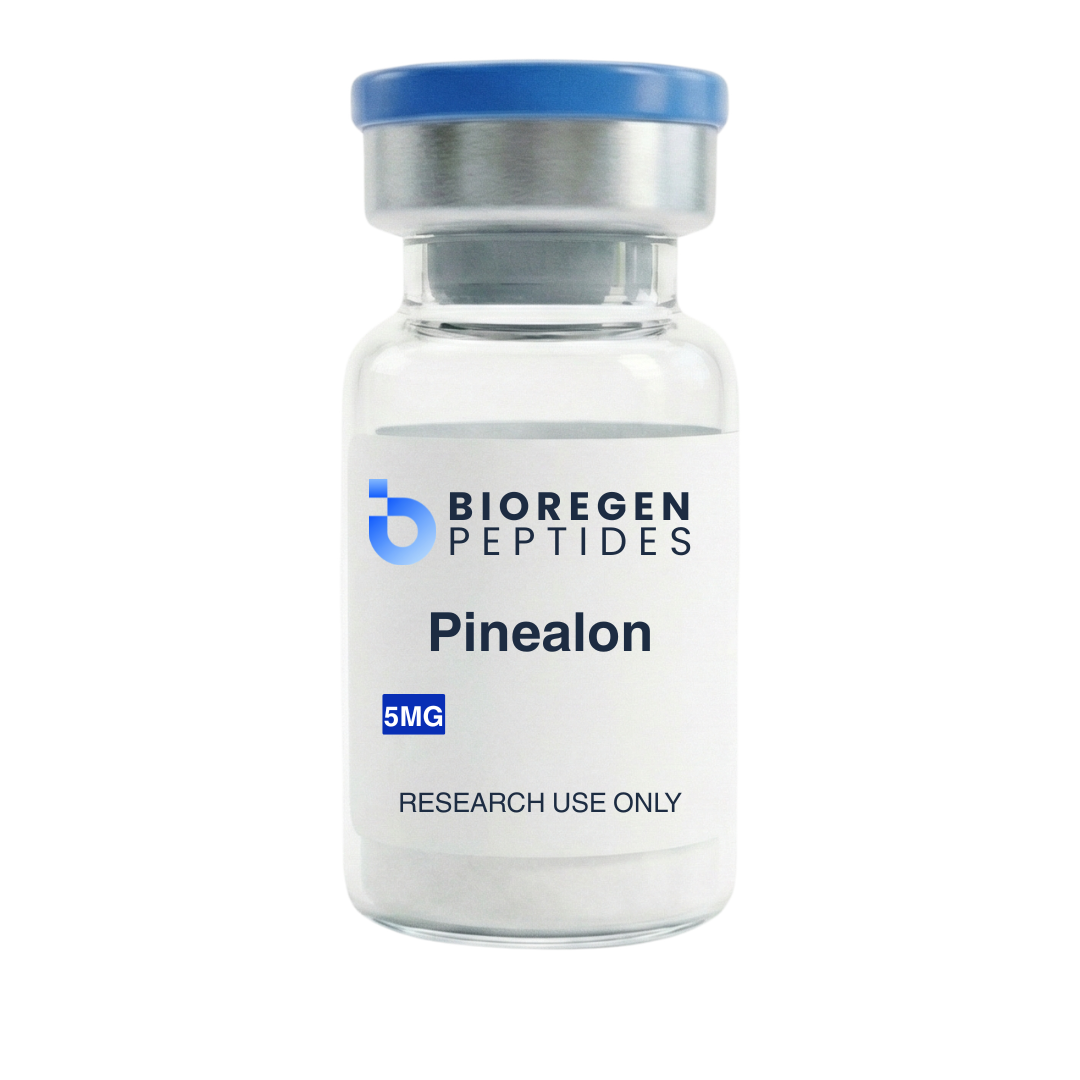
Pinealon
Pinealon
The Neuro-Epigenetic Bioregulator
Pinealon is a synthetic, ultra-low molecular weight tripeptide (Glu-Asp-Arg) designed for high-affinity interaction with the central nervous system. Unlike larger proteins, Pinealon easily traverses the blood-brain barrier to modulate gene expression within neuronal tissues.
-
Mechanism: Functions as a peptide bioregulator, resetting protein synthesis and gene expression in brain cells to a functional, “youthful” state.
-
Key Advantage: Demonstrates extreme tissue-specificity for the brain and pineal gland without the systemic side effects of larger neuropeptides.
-
Research Focus: Circadian rhythm stabilization (melatonin regulation), neuroprotection against hypoxia, and the reversal of age-related cognitive decline.
-
Purity: >99% (Third-party HPLC/MS verified).
-
Format: Lyophilized powder for laboratory research use.
Strictly for laboratory and research purposes only.
$1.00
Pinealon Research-Grade Neuroprotective Tripeptide
Product Overview
Pinealon is a synthetic tripeptide (3 amino acids) belonging to the class of peptide bioregulators. Developed originally at the St. Petersburg Institute of Bioregulation and Gerontology, Pinealon is specifically designed to interact with the epigenetic structures of the central nervous system (CNS).
In scientific literature, Pinealon is recognized for its high degree of tissue specificity. Unlike larger proteins that struggle to cross the blood-brain barrier (BBB), Pinealon’s ultra-low molecular weight allows it to penetrate the CNS with ease. Its primary mechanism involves the modulation of gene expression within neurons, specifically targeting the stabilization of the circadian rhythm and the protection of cellular structures against oxidative stress and hypoxia. Research in neuro-gerontological models has observed Pinealon’s ability to improve cognitive function, short-term memory, and coordination by restoring the protein synthesis balance within brain tissues that has been disrupted by aging or environmental trauma.
Primary Research Applications
Under doctor-reviewed scientific literature, Pinealon is frequently utilized in in vitro and animal model studies to observe:
-
Neuro-Epigenetic Modulation: Investigating the peptide’s ability to “reset” gene expression in neurons to a more youthful and functional state.
-
Circadian Rhythm Stabilization: Observing the regulation of pineal gland function and the subsequent normalization of melatonin production pathways.
-
Hypoxia & Ischemia Protection: Measuring the reduction of neuronal apoptosis (programmed cell death) following oxygen deprivation or toxic insult.
-
Cognitive Enhancement Research: Tracking improvements in reaction time, memory retention, and intellectual endurance in models of age-related cognitive decline.
The BioRegen Standard
When you source your Pinealon from BioRegen Peptides, you are backed by our five core pillars of quality and service:
-
Uncompromising Purity: Every batch is independently third-party tested to guarantee >99% purity and molecular integrity, ensuring your neurological research data is precise and reproducible.
-
Doctor-Reviewed Accuracy: All product specifications and research handling guidelines are medically reviewed for absolute scientific accuracy.
-
Unbeatable Value: Premium, verified research compounds at industry-disrupting prices.
-
Fast, US-Based Shipping: Stocked physically in the USA to bypass customs delays and arrive at your lab in days.
-
Dedicated Support: Have a question about the tripeptide bioregulation mechanism? Email our US-based team at support@bioregenpeptides.com for a rapid response.
Product Specifications
-
Nomenclature: Pinealon
-
Amino Acid Sequence: Glu-Asp-Arg (L-Glutamyl-L-aspartyl-L-arginine)
-
CAS Number: 1144023-74-8
-
Molecular Formula: $C_{15}H_{26}N_{6}O_{8}$
-
Purity: >99% (Verified via HPLC/MS)
-
Format: Lyophilized Powder
Regulatory Notice: This product is sold strictly for laboratory and research purposes only. It is not intended for human consumption, diagnostic, therapeutic, or prophylactic use. Please refer to our doctor-reviewed handling guidelines for proper research protocols.