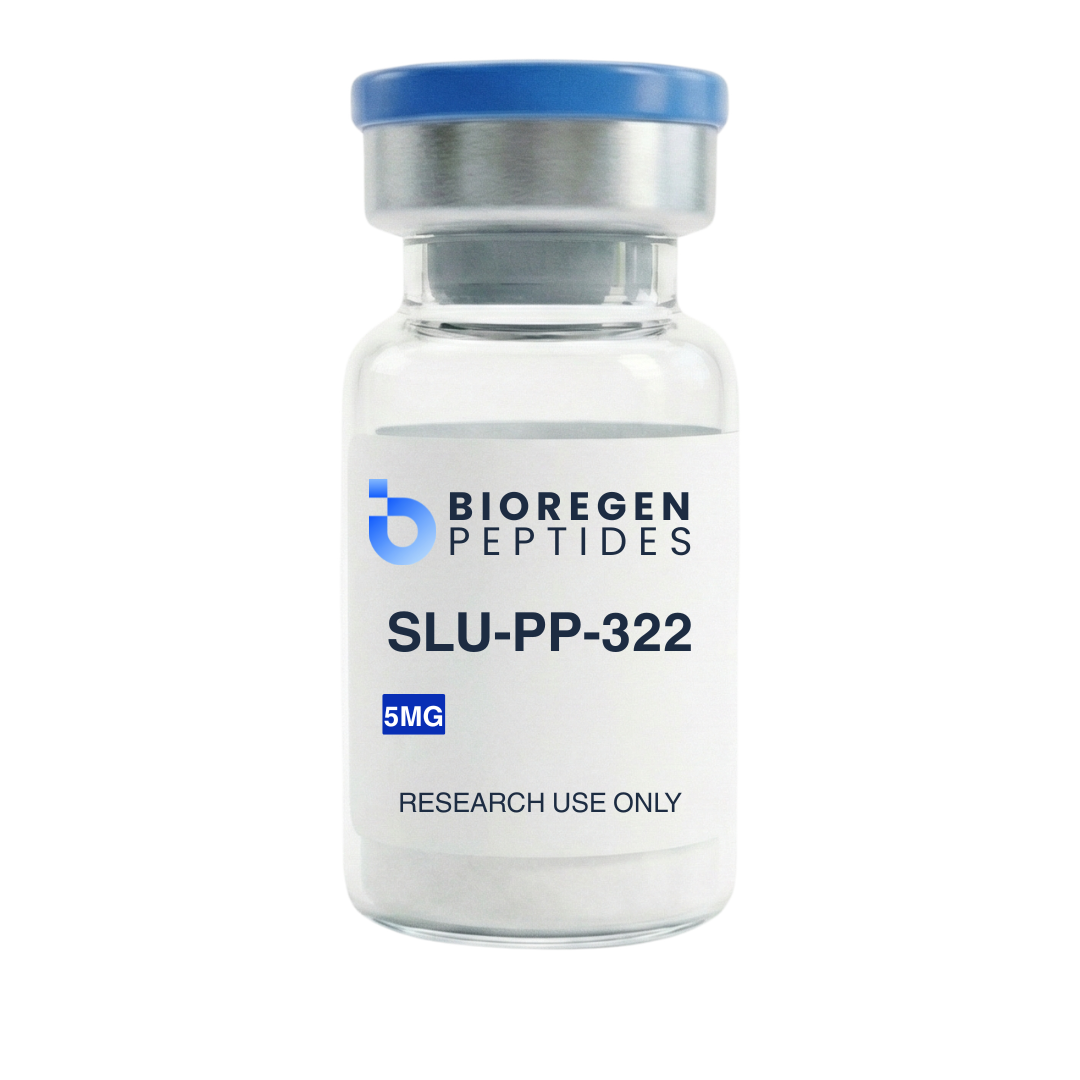
SLU-PP-322
SLU-PP-322
The “Exercise Mimetic” & Mitochondrial Agonist
SLU-PP-322 is a synthetic small-molecule agonist of the Estrogen-Related Receptors (ERRα, β, and γ). Despite its name, it does not interact with natural estrogen; instead, it serves as a master regulator of cellular energy production.
-
Mechanism: Upregulates genes responsible for mitochondrial biogenesis and fatty acid oxidation, effectively simulating the metabolic demands of high-intensity aerobic exercise.
-
Key Advantage: Increases oxygen consumption and whole-body energy expenditure without requiring physical activity, making it a potent “exercise in a vial” research tool.
-
Research Focus: Obesity reversal, metabolic syndrome mitigation, and the preservation of muscle integrity in sedentary or age-related catabolic states.
-
Purity: >99% (Third-party HPLC/MS verified).
-
Format: Lyophilized powder for laboratory research use.
Strictly for laboratory and research purposes only.
$1.00
SLU-PP-322 Research-Grade Estrogen-Related Receptor (ERR) Agonist
Product Overview
SLU-PP-322 is a potent, synthetic small-molecule agonist of the Estrogen-Related Receptors . Despite their name, these “orphan” receptors do not bind natural estrogens; instead, they function as master regulators of mitochondrial biogenesis and oxidative metabolism.
In scientific literature, SLU-PP-322 is classified as an “exercise mimetic.” Its primary mechanism involves the robust upregulation of genes responsible for mitochondrial function and fatty acid oxidation, effectively “tricking” muscle tissue into a state of high-intensity aerobic activity. Research in metabolic models has shown that SLU-PP-322 increases oxygen consumption and cellular energy expenditure without requiring physical exertion. This makes it a premier compound for investigating the mitigation of obesity, the reversal of metabolic syndrome, and the preservation of skeletal muscle integrity in sedentary or age-related catabolic states.
Primary Research Applications
Under doctor-reviewed scientific literature, SLU-PP-322 is frequently utilized in in vitro and animal model studies to observe:
-
Mitochondrial Biogenesis: Investigating the proliferation and functional optimization of mitochondria in skeletal and cardiac muscle.
-
Metabolic Flexibility: Observing the transition of cellular fuel preference from glucose to fatty acids, contributing to reduced adiposity.
-
Exercise Mimetic Response: Measuring the enhancement of endurance capacity and peak oxygen consumption ($VO_2$ max) in exercise-naïve models.
-
Cardioprotective Effects: Tracking the preservation of myocardial energetics and the reduction of metabolic stress in models of heart failure or cardiac dysfunction.
The BioRegen Standard
When you source your SLU-PP-322 from BioRegen Peptides, you are backed by our five core pillars of quality and service:
-
Uncompromising Purity: Every batch is independently third-party tested to guarantee >99% purity and molecular integrity, ensuring your metabolic data is precise and reliable.
-
Doctor-Reviewed Accuracy: All product specifications and research handling guidelines are medically reviewed for absolute scientific accuracy.
-
Unbeatable Value: Premium, verified research compounds at industry-disrupting prices.
-
Fast, US-Based Shipping: Stocked physically in the USA to bypass customs delays and arrive at your lab in days.
-
Dedicated Support: Have a question about the ERR$\alpha$ vs. ERR$\gamma$ binding affinity? Email our US-based team at support@bioregenpeptides.com for a rapid response.
Product Specifications
-
Nomenclature: SLU-PP-322
-
Mechanism: Pan-ERR Agonist ($\alpha$, $\beta$, $\gamma$)
-
Chemical Class: Small Molecule / Exercise Mimetic
-
CAS Number: 2169687-35-6
-
Molecular Formula: $C_{16}H_{11}F_{6}NO_{3}$
-
Purity: >99% (Verified via HPLC/MS)
-
Format: Lyophilized Powder / Crystalline Solid
Regulatory Notice: This product is sold strictly for laboratory and research purposes only. It is not intended for human consumption, diagnostic, therapeutic, or prophylactic use. Please refer to our doctor-reviewed handling guidelines for proper research protocols.